Decoding Ultimate Sliding Dynamics Through Metrics & Surgical Engineering
In the demanding world of contemporary pro-level oversteer competition, success is no longer exclusively a product of sheer torque or driver bravado. Instead, it has become a complex science that requires a painstaking marriage of choosing a time-tested car, arming it with the correct competition hardware, and, most critically, understanding its dynamic behavior on the track through advanced drift telemetry software. This exhaustive guide will serve as your blueprint from the initial concept of a drift build all the way to the last engineering-refined refinements that elevate a capable machine into a consistent winner. We will thoroughly explore the precise engineering of chassis dynamics adjustment, demonstrating how a modern vehicle dynamics tool like a dedicated telemetry system eradicates guesswork and provides unmatched visibility into your vehicle's true dynamics.
The cornerstone of any great drift car is, indisputably, the platform itself. Certain vehicles have attained iconic status within the international sliding community due to their built-in handling characteristics, robust build quality, and the immense range of aftermarket components available. Choosing the right starting point is the initial and most significant decision a driver will make. As an example, the BMW's E36 3 Series is widely regarded as among the best balanced drift platforms of all time. Its almost ideal balanced front-to-rear weight, alongside a RWD layout and robust inline-six motors, creates a car that is both easy to handle for beginners and extremely effective in the control of a expert driver. The successor of this concept, the E46 model BMW, builds upon these strengths with a more developed chassis, broader wheel track for greater high-speed stability, and yet more lock as standard from the factory. A different formidable platform in the pro circuit is the Corvette C6.
This V8-powered track weapon brings a distinctive array of strengths to the sliding sport, featuring a lightweight aluminum frame, a backwards-positioned gearbox and differential unit that contributes to an ideal front-to-rear mass ratio, and the immense low-end power of a big LS-series V8 engine. This combination renders it an complete weapon on track, designed of initiating and maintaining long drifts with apparently minimal use of power. For builders desiring remarkable performance per dollar, the Nissan Z33 excels as a prime example. It arrives from the factory with a stiff body structure, a effective original limited-slip differential, and the smooth VQ35DE engine that provides ample power and torque for mastering and advancing in the activity. Its newer version, the 370Z model, presents additional refinements in chassis stiffness, steering geometry, and peak powerplant output, cementing its status as a common pick among competitive drivers. Other legendary cars that merit mention are the nimble unique FC generation RX-7, the ever-present Nissan S13 240SX, the American SN95 generation Mustang, the modern BMW E90, and the compact yet surprisingly playful and instructive Mazda Miata. All of these cars provides a unique array of characteristics, complexities, and potentials, but they all possess the core ingredients required to become a serious drift machine.
However, selecting the optimal car is just the first step. To unlock the full potential of every of these vehicles, substantial modifications to the steering system and suspension systems are utterly non-negotiable. This is where the world of precision tuning hardware enters vital focus. The one most transformative improvement for a serious drift machine is the installation of a drift-spec angle modification kit. These sophisticated systems, for example those engineered by performance brands like SLR, are engineered to significantly increase the car's possible steering angle. A factory production vehicle is highly limited in how far its steering tires can pivot, a design trade-off for public road operation. In drifting, but, maximum steering input is constantly necessary to control and sustain a slide. An angle kit substitutes the stock hubs, tie rods, and sometimes control arms with parts that enable the steered wheels to attain angles over 70 or even 80 degrees, versus a normal stock limit of around 40 to 50 °.
This tremendously increased lock gives the pilot with significantly more command during a slide, enabling it to be considerably more straightforward to initiate a drift, maintain it through a extended corner, and change seamlessly from one side to the opposite. The difference in controllability is absolutely revolutionary. Paired with a properly selected steering kit is the every bit as vital upgrade to the chassis's spring and damper setup. Generic or even expensive sport coilovers are just not intended for the specific and brutal requirements of drifting. A purpose-built set of coilovers is paramount. These specialized coilovers have unique piston tuning and spring strength that are tuned for the extreme load shifting that is inherent of drifting. When a driver begins a slide, the car's mass is thrown forcefully to the outside of the bend. Optimal performance dampers manage this transfer in a controllable way, allowing the chassis to find its balance rapidly and providing the driver accurate feel through the steering wheel and cockpit. They additionally provide accurate setting of stance, shock absorber firmness, and cross-weight, which are all key parts of optimizing the chassis's behavior to a given track or competition style. As a system, a precision-engineered drift angle kit and a correctly specified pair of competition coilovers constitute the absolute hardware base upon which all subsequent optimization is built.
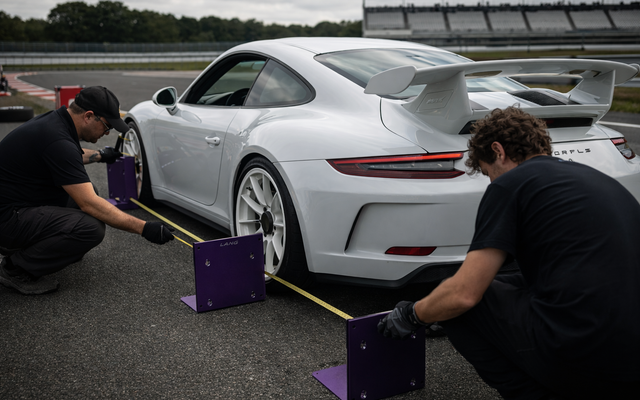
Once the fundamental parts is in place, the following critical stage in the build is the precise setting of the car's wheel angles. This is the domain of chassis dynamics adjustment, a procedure that can seem intimidating to the uninitiated but is, in fact, the secret to turning a assembly of fast pieces into a cohesive and controllable vehicle. The most discussed parameter of alignment for oversteer is undoubtedly camber angle. Camber angle is the inclination of the tire compared to the upright line when looked at from the forward of the car. If the top edge of the wheel is tilted towards the car, this is known as inward tilt. For drifting, an inward tilt on the steering wheels is universally applied and is considered necessary. The logic is intrinsically linked to physics.
When a vehicle is turning at high sideways angles, the body leans to the external of the bend. This body roll causes the outside steering tire to diminish its optimal contact patch with the track surface. By applying inward lean, the wheel is pre-tilted to compensate for this lean. As the chassis tilts into the bend, the tire becomes more upright on the asphalt, optimizing its grip at the exact time when it is most required for directional command. Commonly, front axle camber settings for a serious drift machine fall between approximately -3 degrees to as high as -5 degrees or even beyond, depending on the parameters of the vehicle setup, compound choice, and driver preference. The rear wheels also employ negative camber, but the settings are usually more modest and more nuanced than the front. Overly aggressive inward lean at the rear can make the car extremely tail-happy and difficult to predict on power input, as it diminishes the effective grip area of the powered tires during forward acceleration. Hence, rear adjustments are frequently in the vicinity of -1 degree to -3 degrees, finding a delicate compromise between providing sufficient cornering bite to help in starting and holding the angle while still keeping effective hook-up for power-down the turn. Camber is only one part of the more complex suspension geometry picture, which additionally involves toe setting, caster angle, and suspension-induced steering adjustment.
Toe describes the orientation of the wheels when looked at from above. Inward toe means the leading edges of the wheels are nearer together than the rear edges, while outward toe means the converse. For drifting, a slight amount of front axle toe-out is frequently employed to improve the initial handling feel, making the vehicle feel more responsive and eager to start a oversteer moment. Rear axle toe is usually set to neutral or a incredibly slight amount of inward toe to encourage straight-line stability under acceleration. Caster is the frontwards or backwards inclination of the steering axis when viewed from the side-on of the car. More caster angle increases steering feel and high-velocity confidence, and it additionally adds to camber gain during cornering, which is very advantageous. Setting these values is a detailed interplay where a change to one parameter can and often will influence the remaining parameters. The traditional method for tuning a vehicle's suspension geometry for competition has long been a tedious process of guesswork and adjustment. A pilot or crew would apply a change based on experience, drive the car on track, rely on the operator's individual perception and impressions, and then apply another adjustment. This process would iterate time after time until the vehicle felt "right" or the available track period ended. This approach is not just incredibly inefficient in terms of man-hours and costs, but it is furthermore deeply inaccurate.
Human feel is a famously inconsistent metric, influenced by many variables such as tiredness, changing track grip levels, ambient heat, and simply the focus of the operator on that given session. What feels "loose" on one pass might feel "understeery" on the next pass, resulting in confusing data and ineffective adjustments. This traditional problem in car suspension tuning is specifically where contemporary technology has made its mark to completely change the landscape.
The rise and integration of sophisticated vehicle dynamics tools has introduced a completely new era for engineering and optimizing high-performance drift cars. This new generation of systems, represented by innovative systems like modern telemetry hardware, work by directly recording the real-time mechanical performance of the car as it is piloted on the track. As opposed to relying on personal feedback, these tools collect objective information on essential parameters such as damper compression and extension, wheel speed, G-force loading, lock position, and accelerator and brake pedal input. This raw data stream is then analyzed by sophisticated software that can graph and decode the metrics in a clear way. For the very first time, tuners and crews can observe specifically what the car is doing at any given moment of a lap. This function transforms the whole alignment optimization workflow. Imagine the specific challenge of dialing in the front camber for a specific chassis. As an alternative to introducing a modification from -3 degrees to -3.5 degrees and then running multiple laps to try car suspension tuning and "feel" a difference, a vehicle dynamics tool can deliver instant and clear data. The application can display visually how the tire's contact patch is behaving during the critical phases of a drift: initiation, mid-corner, and transition. It can demonstrate if the current camber setting is permitting the loaded tire to achieve ideal loading or if the rubber is over-stressed on its outside edge.
The system can then suggest fact-based suggestions for change. Perhaps the data shows that the outside front tire is even stressing its edge at -3.5 degrees of camber, implying that a move towards angle, say -4 degrees, might be advantageous. Conversely, the data might show that the tread is failing to reaching temperature or that the inside shoulder is wearing unevenly, which could indicate that there is excessive negative camber and a modest decrease back to -3.2 degrees would be more efficient. This degree of precision and practical analysis was simply unimaginable in the days of pure seat-of-the-pants setup.
The impact of employing a advanced vehicle dynamics tool reaches well beyond merely setting camber. It functions as an priceless coilover setup tips that is customized to your exact vehicle. When fine-tuning the damping values on your coilovers, rather than relying on imprecise guidelines or mimicking another car's settings, you can employ the telemetry to analyze how the chassis is reacting in response to your changes. The application can show the wheel movement trace over a run, highlighting if the shocks are handling the weight transfer properly or if they are causing the car to oscillate excessively after a direction change. It can assist in diagnosing issues like excessive compression or topping out, allowing you to apply data-backed decisions to helper springs, damping settings, or ground clearance. This approach applies just as well to the intricate art of car alignment tuning. Beyond camber angle, the software can provide insight into how adjustments to toe settings and caster angle are influencing the coilover setup tips vehicle's stability during different phases of a drift angle kits slide. For instance, it can allow you to find the optimal amount of front toe-out for your particular steering rack configuration and competition approach by showing the speed of initial response and the consistency of the car at maximum lock. This turns the software an extremely powerful drift suspension tuning guide that is actively calibrated by the actual performance of your own car on the circuit. It shifts the entire endeavor from a dark art into a methodical optimization process.
Furthermore, the utility of a system like data acquisition is not at all restricted to expert tuners with large budgets. For the grassroots driver, it functions as an powerful educational tool. It in essence gives the driver with the insight of a professional race engineer without the typical cost. It drastically shortens the tuning process by delivering unambiguous answers to questions that would normally take countless track days of trial and error to understand. A driver can see how their particular vehicle behaves to specific inputs, developing a more intuitive knowledge of vehicle dynamics in the journey. It also makes accessible high-level chassis dynamics concepts, enabling all drivers with the drive to perfect their car to do so in a efficient and effective way. This is especially significant in a sport like sliding, where engineering expertise has historically been a tightly held advantage among professional crews. In the modern era, that knowledge can be in the hands of any dedicated enthusiast.
In summary, the path to engineering and dialing in the ideal competitive drift car is a multi-stage endeavor that seamlessly integrates proven engineering knowledge with 21st-century telemetry tools. It starts with the strategic selection of a proven car, then built upon the installation of critical competition hardware like maximum-angle drift angle kits and properly selected competition coilovers. The build then progresses into the detailed phase of alignment optimization, where settings like camber, toe setting, and caster are carefully adjusted to complement the car's upgraded geometry and the driver's individual needs. Ultimately, and what truly distinguishes the today's methodology from the traditional methods, is the integration of a advanced drift telemetry software. This platform removes the uncertainty and trial and error of solely seat-of-the-pants tuning by delivering quantifiable, actual data on how the vehicle is truly behaving. It serves as an indispensable diagnostic aid, a definitive alignment optimization handbook, and a master vehicle dynamics tool. In unison, this holistic methodology ensures that every component of the drift machine—from the choice of the platform to the last click on the damper—is optimized for ultimate success on the circuit. It signifies the full evolution of the art of oversteer driving, connecting physical driving skill with data-informed vehicle setup to build the most dominant cars possible.